Welcome to the home of Sebastian Copeland’s adventures, advocacy and artistic endeavors.
For Sebastian Copeland's Fine Art photography site please click HERE
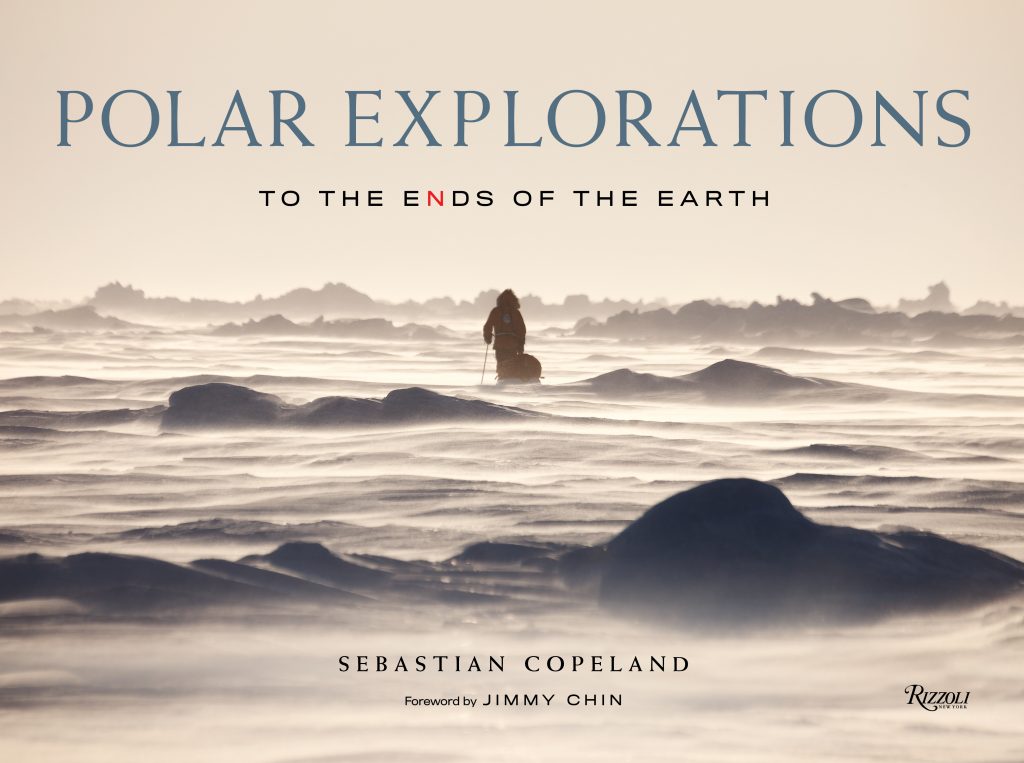
The second in Sebastian’s Polar trilogy, Polar Explorations: To The Ends of the Earth (Rizzoli) follows the preceding 2020’s Antarctica: The Waking Giant (Rizzoli) and will be released this fall. The book features a foreword by mountaineering photographer legend Jimmy Chin.
Polar Explorations is a deep immersive look behind the curtain of Sebastian’s seminal expeditions across the Earth’s biggest bodies of ice. It chronicles his 2009 North Pole expedition on skis with partner Keith Heger, which was featured in the acclaimed film Into the Cold (2011). The book also covers Sebastian and partner Eric McNair-Landry’s record setting crossing of the Greenland ice sheet from South to North on skis and kites, a distance of 2300km. Finally, it takes a deep look at Antarctica’s immense desert which Sebastian crossed again with McNair-Landry, an adjusted distance of over 4,000 kilometers. The men opened a new root linking the East coast to the West cost via the Pole of Inaccessibility and the South Pole, visiting areas that had never, before theirs, seen a human footprint.
Polar Explorations is the winner of the 2022 Independent Book Publisher Book of the Year (Nature).
It is available for pre-order now wherever fine books are sold. Sebastian Copeland’s latest book Polar Explorations: To the Ends of the EarthMore
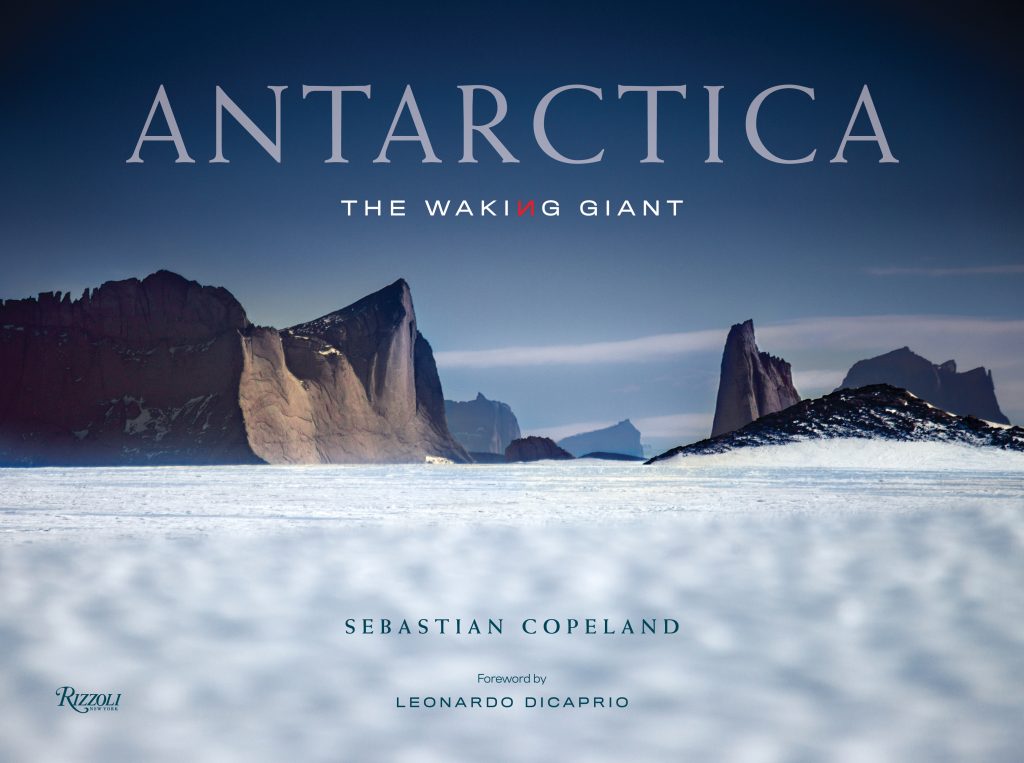
ANTARCTICA: The Waking Giant (Rizzoli) by Sebastian Copeland Foreword by Leonardo DiCaprio
“A breathtaking glimpse of Antarctica.” – The Times of London.
NEW RELEASE: This fall, Rizzoli Books published Sebastian’s latest monogram. ANTARCTICA: Thee Waking Giant (2020) features never before seen photographs gathered during Sebastian’s Antarctica expeditions, both in the coastal and interior region of the least known continent on Earth. If the coast teems with life, both indigenous and migratory, the interior is a white desert where life has not existed for more than 30 million years.
Once you leave the coast, on the way to the interior, sheer mountain faces are progressively swallowed by the rising ice sheet. The last of the nunataks announce the end of the glacier and start of the plateau, extending for thousands of miles. With only ice and sky, the vistas are surprisingly diverse. While the plateau may seem like a monotonous blanket of white, “in the months that I spent there, I can honestly say that no two days have looked alike,” says Sebastian. “In this binary environment, which had never, until mine, seen a human footprint, it is the subtle variation of surface cover, or the way the sky paints the clouds or the wind shapes the ice that gives each day its own distinct identity.”
You can find ANTARCTICA: The Waking Giant anywhere fine books are sold, or visit here to find a retailer near you.
“From his Antarctic expeditions, we discover Copeland’s magnificent visual diary of astonishing imagery of the least explored places in the world!” – GQ Magazine
“A work of strident beauty illustrating humanity’s most urgent cause, climate change.” – Cocoeco Magazine
Hello! If have landed on this site looking for Sebastian’s historical expedition activities, you are in the right place.
If, however, you are surprised by the date of the latest blog and are looking for more current information, you may want to visit one of these additional sites:
The Last Great March details Sebastian and Mark’s crossing of the Simpson desert in 2016 and failed attempt at the North Pole in 2017
Sebastian Copeland Fine Art details Sebastian’s photographic activities and currently features his major public exhibition in Paris on the gates of the Luxembourg building.
Thanks for your interest!
– RESTEZ INFORMÉ(E) DES ACTIVITÉS DE SEBASTIAN –
Bonjour!
Si vous visitez ce site en espérant trouver des informations sur les aventures de Sebastian, vous êtes à la bonne adresse!
Cependant, si vous êtes surpris(e) par la date des derniers blogs, et vous cherchez des informations plus récentes, vous pouvez visiter les sites suivants:
The Last Great March couvre la traversée du desert du Simpson en Australie en 2016 ainsi que la tentative frustrée pour le pôle nord sans support.
Sebastian Copeland Fine Art est les site dédié aux activités photographique de Sebastian est figure son exposition importante sur les grilles des jardins du Luxembourg à Paris.
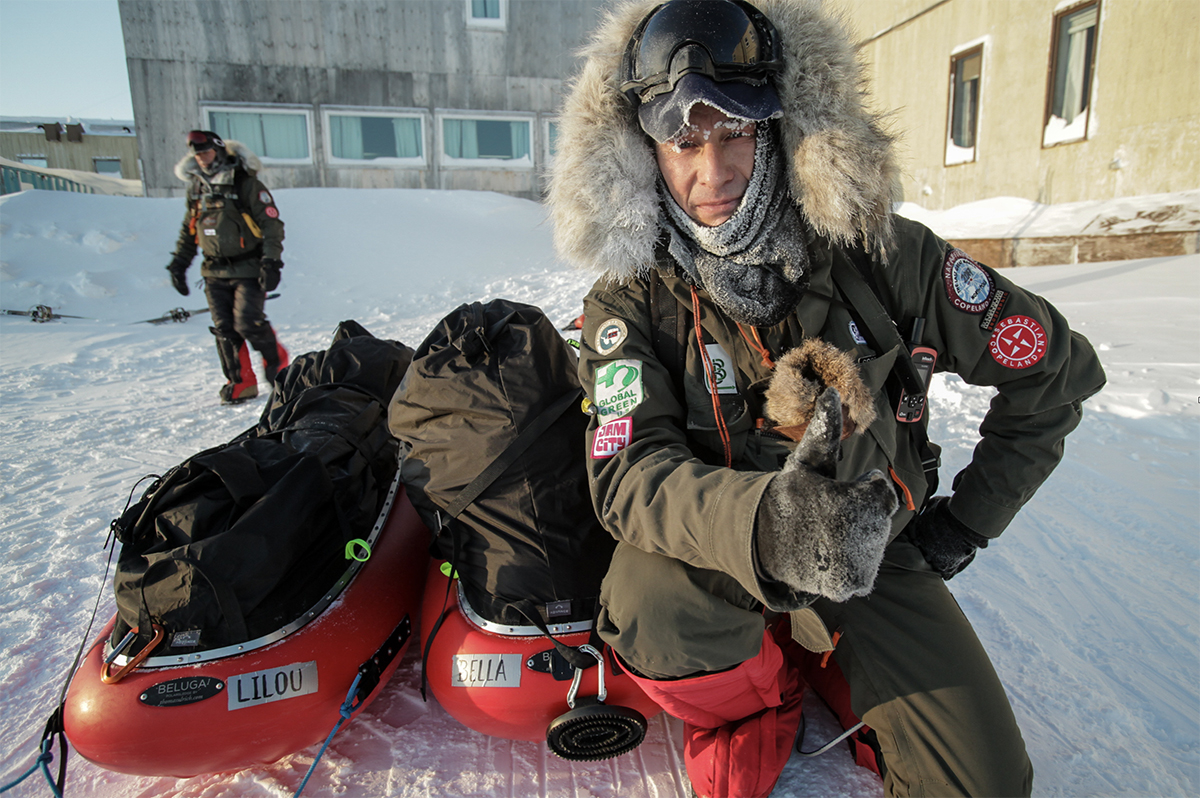
In 2017, Sebastian was named one of the world’s 25 top adventurers of the last 25 years by Men’s Journal. He is a climate analyst, award-winning photographer and aspirational athlete and combines these tools to powerfully communicate the urgency of action on climate change and sustainable growth.
Sebastian is an ambassadors for such forward thinking brands as Audi, Norrøna, Zeiss and Ulysse Nardin. His current and past sponsors include HP, Napapijri, Revo, and Herbalife with support from Canon, MSR, Rossignol, Ozone kites and Hilleberg tents, Lexar and Nemo equipment among others.
For 20 years Sebastian Copeland has been documenting his expeditions and adventures in the form of books, exhibitions, events and films – transforming himself and inspiring the people and organizations that he comes into contact with. We hope you find inspiration to become an advocate of the environment as well while you explore our site! Sebastian is also the Founder and Chairman of The Sedna Foundation – a non-profit organization dedicated to raising support and awareness of environmental issues in the front lines of climate change.